

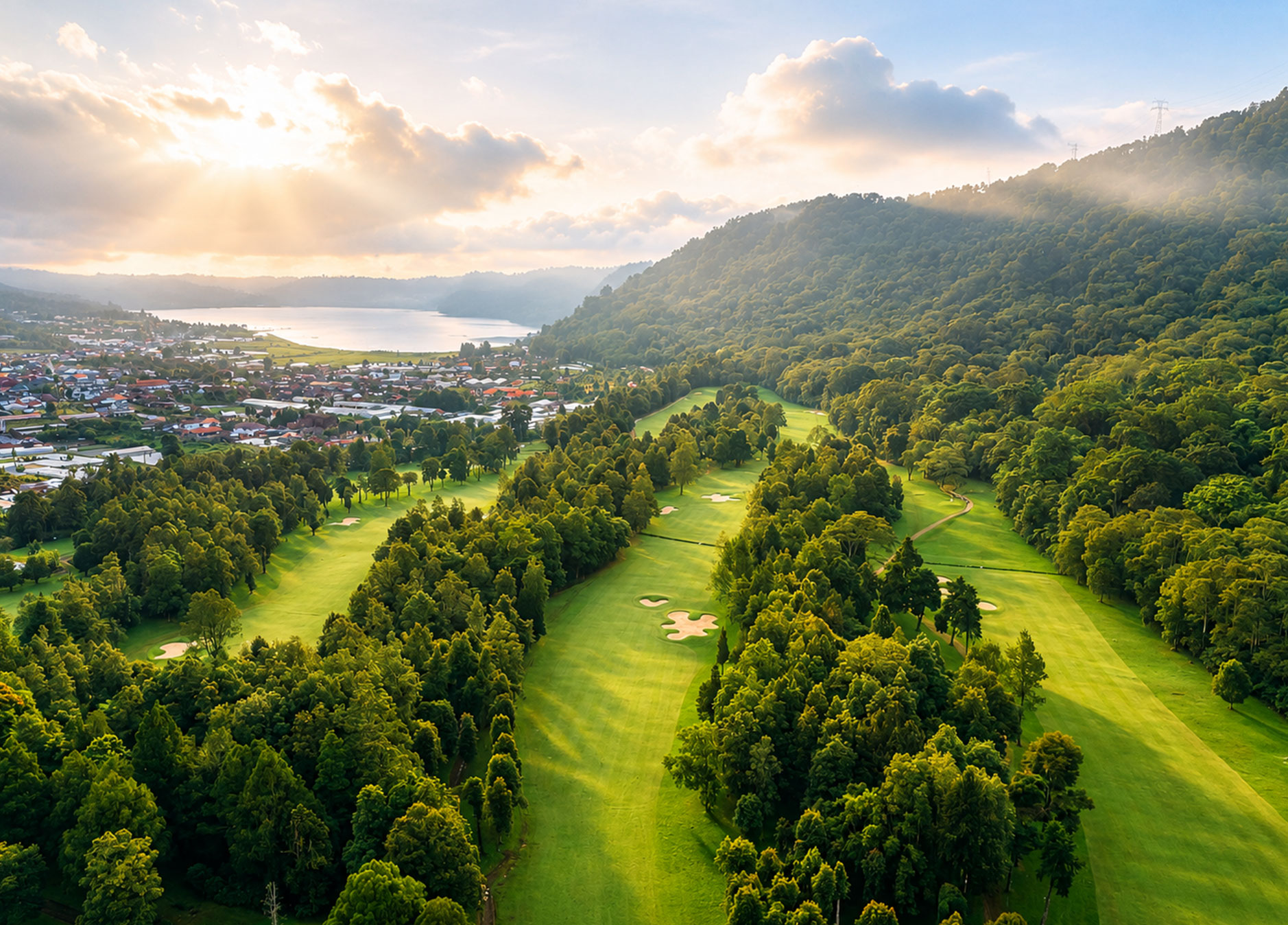
There are golf courses with water views, and there are golf courses with mountain views, and then there is Handara, which has both because it was built inside the crater of a dormant volcano. At 1,142 meters above sea level in the central highlands of Bedugul, Handara Golf & Resort Bali is the highest golf course in Indonesia, and very likely the only one anywhere where the front nine and the back nine are separated by the rim of an extinct caldera. This is a guide to the course itself: the layout, the holes worth knowing before you tee off, and what playing golf at altitude actually feels like.
A Course With History
Handara officially opened in 1976, making it Bali’s first golf resort in Indonesia, predating the island’s now-famous coastal courses by more than a decade. It was designed by five-time British Open champion Peter Thomson, alongside Michael Wolveridge and Ronald Fream, a pairing responsible for some of Asia’s most respected parkland layouts. Golf Magazine later named it one of the 50 Greatest Golf Courses in the World, a ranking that still gets cited by golfers who make the trip north specifically to play it.
The course was built before bulldozer-and-blueprint golf course design became the norm, which shows in how naturally it sits inside the landscape. Rather than imposing a layout on the terrain, Thomson and his team worked with the crater’s existing contours, the native rainforest, and the views toward Lake Buyan and Lake Beratan. Half a century on, the result feels less like a constructed amenity and more like something that was always meant to be there.
The Layout: What You’re Playing
Handara is an 18-hole, par-72 championship course stretching to roughly 6,983–7,024 yards from the championship tees, with regular and ladies’ tees considerably shorter. The fairways are a mix of Kikuyu and local grasses, and the greens are creeping bentgrass, kept firm and true by the cool highland climate that lowland Bali courses simply cannot replicate.
The front nine plays through the heart of the crater, framed by tall trees and the flame-of-the-forest blooms that line several fairways. The back nine climbs and falls with the crater’s natural elevation changes, including some of the more dramatic tee shots on the course. Caddies are compulsory, as is standard across most of Asia’s premier courses, and at Handara many have been with the club for decades. Several are long-time members themselves, which makes their reads on the greens worth listening to closely.
Signature Holes
A handful of holes tend to stay with golfers long after they’ve left Bedugul.
Hole 1 – Par 5. A generous opening hole at roughly 475 yards, this is as friendly a start as a championship course offers. It’s a confidence-builder before the course starts asking harder questions, and a realistic chance at an early birdie if the tee shot finds the fairway.
Hole 3 – “Stone Bridge,” Par 4. Widely considered the most strategically demanding hole on the course. A dogleg right plunges downhill for roughly 435 yards, with a river cutting across the fairway and out-of-bounds hugging the left side. The tee shot has to be placed, not just struck, and the approach into a sloped, bunker-flanked green punishes anything imprecise.
Hole 8. This hole turns golfers’ attention toward Mount Tapak in the distance, with views extending to a crater lake where some of Bali’s oldest known temples sit at the summit. It’s one of several moments on the course where the round pauses to remind you where you actually are.

Hole 14 – Par 3. A demanding long-iron test at just over 200 yards, playing uphill into a sharply contoured green that calls for a fade. A par here is a small triumph and usually enough to settle a friendly bet.
The closing stretch tends to favor the patient. Several reviewers single out the finishing holes for their downhill character, a welcome change of pace after a back nine that asks for sustained concentration.
What Altitude Does to Your Game
Playing at 1,142 meters changes the physics of golf in ways that catch first-timers off guard. Thinner mountain air means the ball travels noticeably farther than it would at sea level, often by ten percent or more. A three-wood that normally carries 230 yards might run out to 260, and a club selection that feels automatic on a coastal course needs rethinking here. It is worth taking a few practice swings on the range before the round simply to recalibrate.
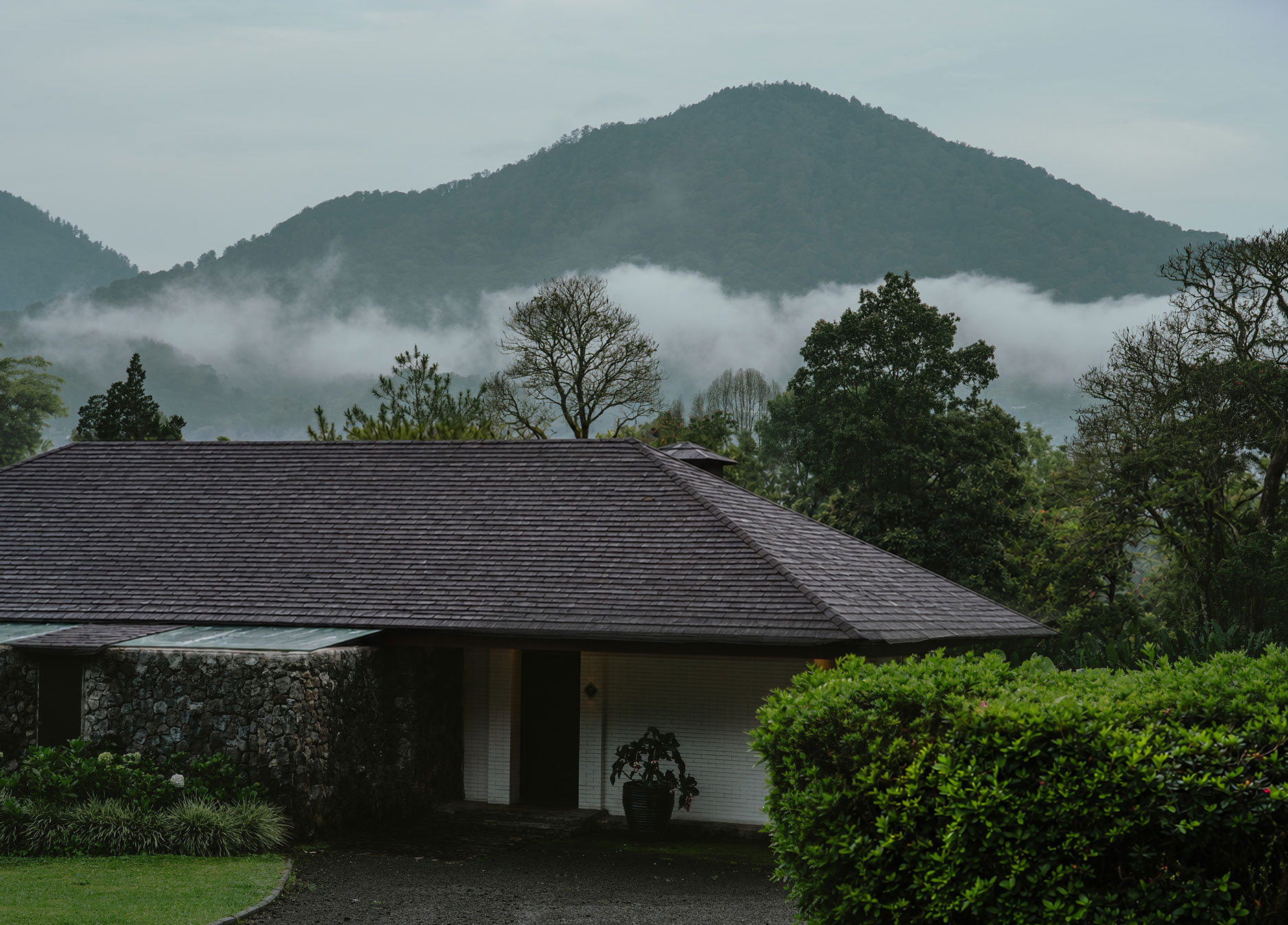
The cooler temperatures, typically between 14 and 24 degrees Celsius year-round, are arguably the bigger story. Bali’s coastal courses can be punishing in midday heat and humidity; Handara’s highland air stays comfortable enough to play a full round without the usual tropical fatigue. Mornings often arrive with a light mist drifting across the fairways before burning off, which is part of what makes early tee times so popular here, both for the golf and for the photographs.
Before You Tee Off
The resort’s practice facilities include a natural grass driving range with a maximum distance of 300 meters, two putting greens, and a bunker practice area, all worth a visit before heading to the first tee, partly to warm up and partly to get a feel for how the ball is behaving in the thinner air.
A few practical notes worth knowing in advance. Caddies are mandatory and an asset rather than an inconvenience, particularly for reading Handara’s notoriously tricky greens. A golf cart is recommended given the course’s elevation changes, though the more energetic might enjoy walking the flatter, downhill-leaning closing holes. And because Handara is a working highland microclimate, afternoon showers are common; an early tee time is the best insurance against losing daylight to a passing squall.

Why This Course Is Worth the Trip
Handara sits roughly two hours from Ngurah Rai International Airport and the south Bali resort areas, which puts off some travelers chasing a quick beach-to-course transfer. But the course rewards the detour precisely because it offers something the coastal courses cannot: a round played inside a volcanic crater, in cool mountain air, surrounded by rainforest and lake views that change character through the morning mist. For golfers who have played their way through Bali’s better-known coastal layouts, Handara is the one that tends to be remembered differently, less for any single spectacular hole and more for the accumulated feeling of having played somewhere genuinely unlike anywhere else on the island.
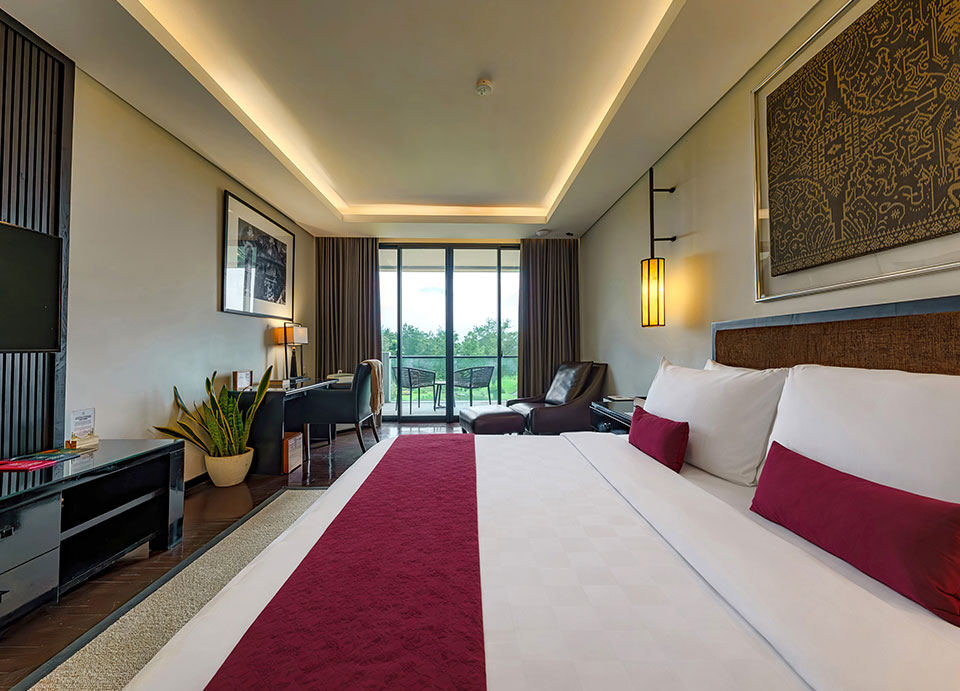
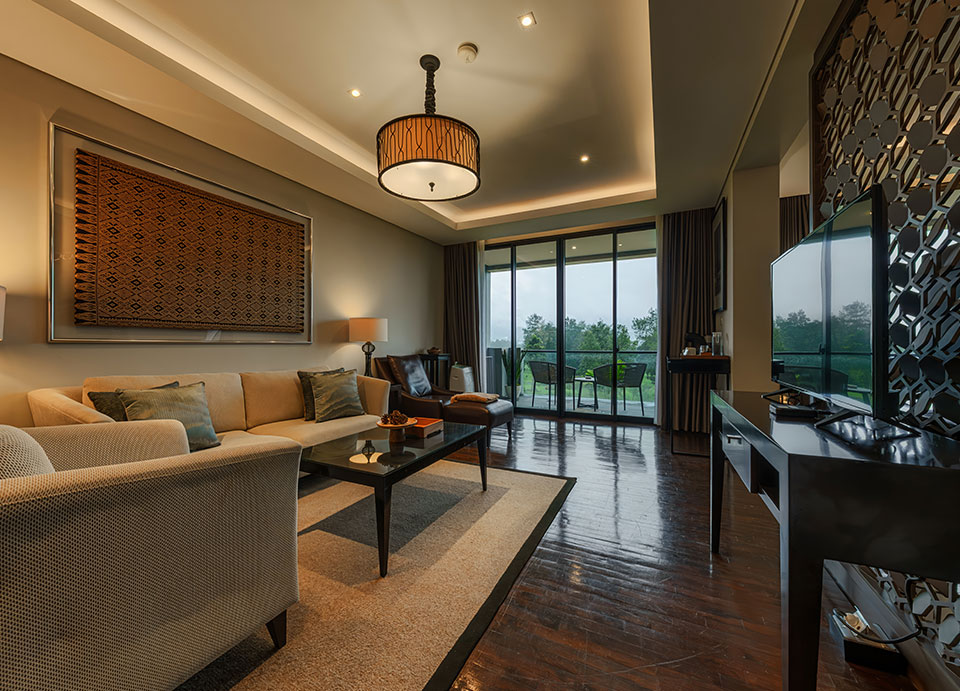
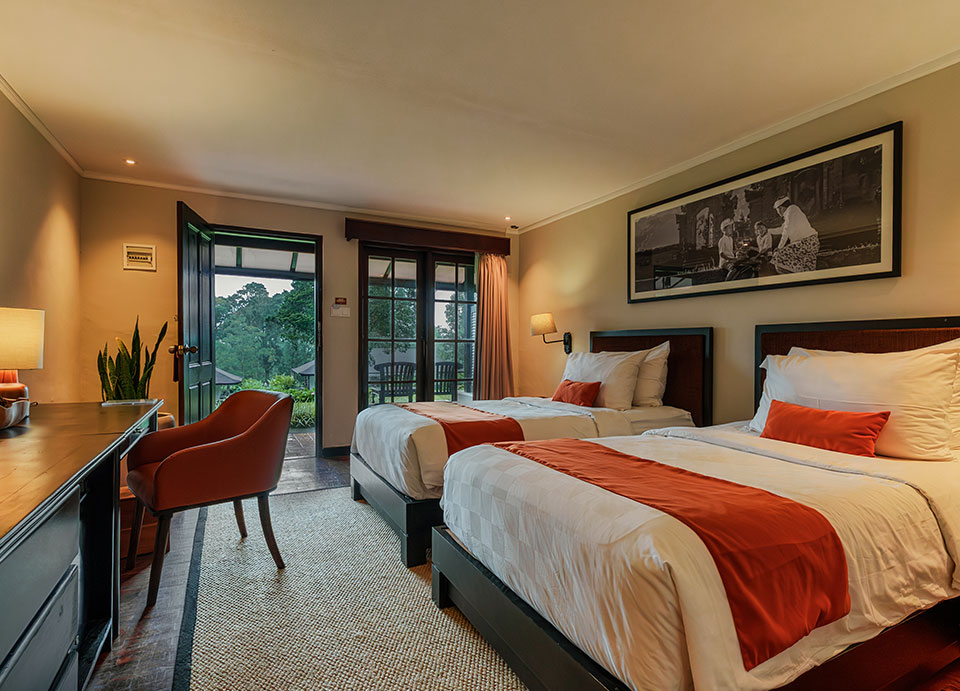
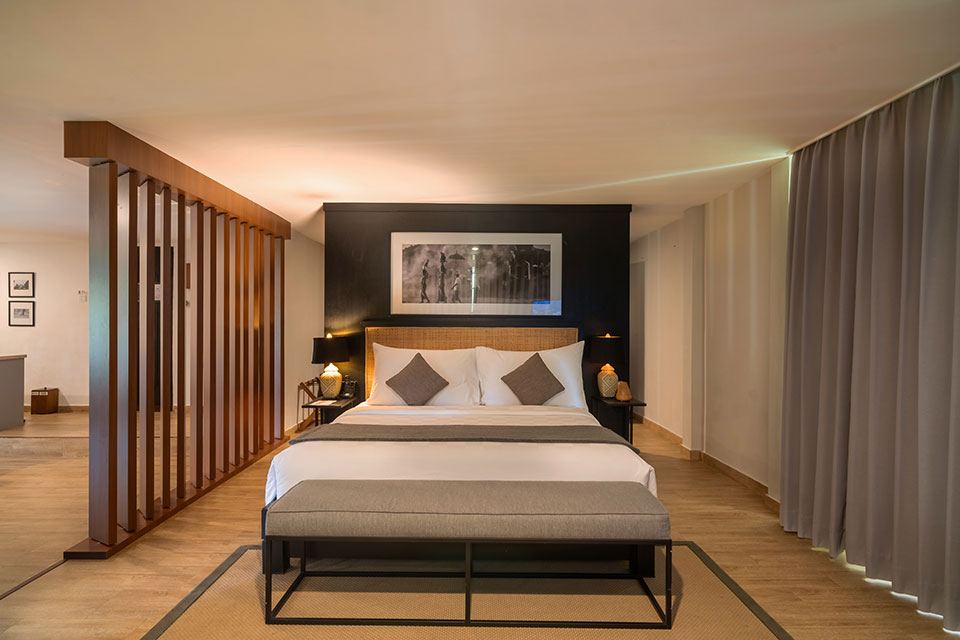
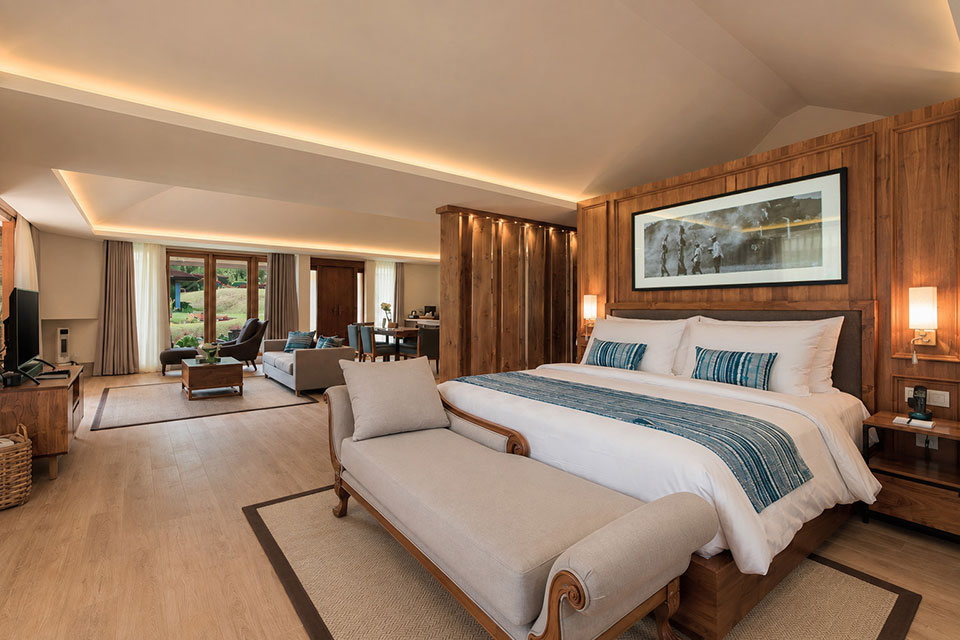
Staying overnight at the resort makes the case even stronger. Guests can be on the first tee at dawn, when the mist is still settled over the fairways and the crater walls are just beginning to emerge from the clouds, well before day-trippers from the south have made the two-hour drive north.
Read more :
→ Experience playing golf at a sustainable Bali resort.
→ Stay & Play at Handara Golf & Resort Bali
→ Navigate Target-Style Golf Courses Better Through These Steps
→ Enjoy a Golf Holiday in Bali with the Stay & Play Experience at Handara Golf & Resort